What Dealers Should Look For in a 700cc Utility ATV: A Spec-by-Spec Checklist
A dealer's checklist for 700cc-class utility ATVs: which specs work buyers ask about first, how to read winch, rack and payload ratings honestly, and what to ask your supplier.
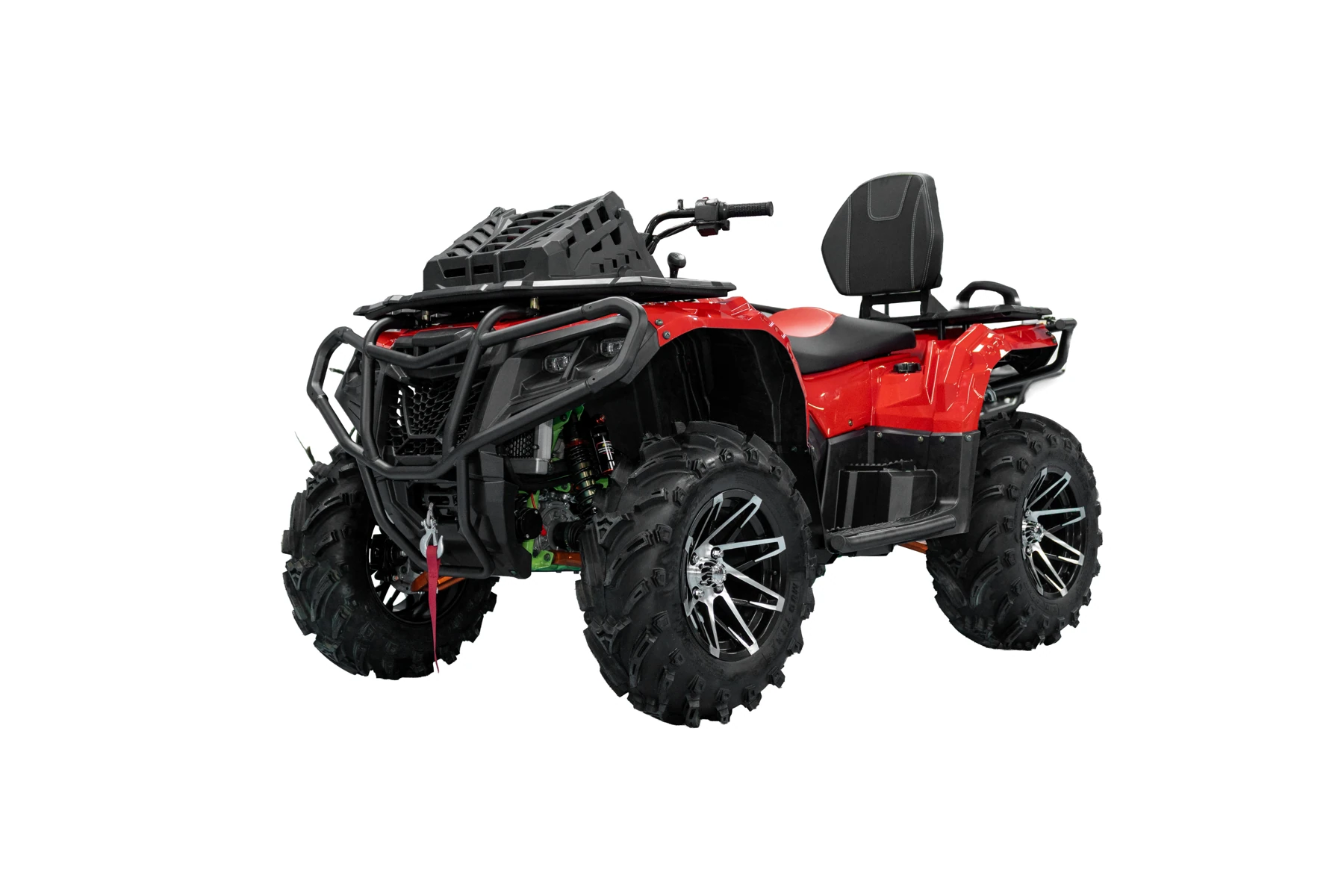
The short answer
A 700cc-class utility ATV sells on work ability, not on looks. Before you stock one, check five things: torque and gearing, 4WD with differential locks, power steering, ground clearance, and honest load ratings for the racks, payload and winch. If a supplier cannot show you each of these on a spec sheet, ask before you order.
Most buying guides for this class are written for riders. This one is written for the dealer who has to explain the machine at the counter and stand behind it after the sale.
Who buys a 700cc-class utility ATV?
The typical buyer needs a machine that works every day: farms, ranches, wood lots, estates and resorts, trail and property maintenance, clearing snow, and rough rural roads where a car struggles.
These customers ask practical questions. Will it pull? Will it climb out of mud? How much can I carry? Is it tiring to steer all day? Your stock should answer those questions on paper before a customer even sits on it.
Which specs do work buyers ask about first?
Work buyers usually start with four specs. Know where to find each one on the spec sheet.
- Torque, and the rpm where it peaks. Torque is what moves a loaded machine up a slope. Peak torque at moderate rpm means the engine pulls well without being revved hard.
- 4WD and differential locks. A switchable 2WD/4WD system saves tyre wear on hard ground. Differential locks force both wheels on an axle to turn together, which helps when one wheel is in mud or snow and the other has grip. Check whether the machine locks the front only, or both front and rear.
- Electric power steering (EPS). EPS makes a heavy 4WD machine much easier to steer at low speed and over rocks. For customers who ride for hours, it is often the feature they notice on the first test ride.
- Ground clearance. More clearance means fewer hang-ups on ruts, stumps and rocks. Compare the figure in millimetres, not marketing words like "high".
Also check the transmission. A CVT with park, reverse, neutral, high and low (P/R/N/H/L) gives the low range a work buyer needs for slow, heavy pulling.
How should you read winch ratings?
A winch rating tells you the line pull, not what the ATV can tow. Mixing the two up is one of the most common mistakes at the counter, and it can lead to unsafe use.
Winch makers rate line pull on the first layer of rope on the drum. As more rope winds on, the drum gets wider and the pull drops. So a 3,000 lb winch pulls up to 3,000 lb only with most of the rope already paid out.
Towing is a separate rating that comes from the vehicle maker. It depends on the frame, the hitch, the brakes and the drivetrain. If a spec sheet lists a winch but no towing rating, ask the supplier for the towing figure in writing. Never quote the winch number as a towing number.
How do you read rack and payload ratings honestly?
Rack ratings and total payload are different numbers, and customers often add them up wrongly.
- Front and rear rack ratings tell you the most each rack can carry on its own.
- Maximum payload is the total the vehicle can carry, including the rider, any passenger, accessories and cargo.
Adding the two rack ratings together does not give you a payload figure. The rider's weight counts against payload too. Off-road vehicle safety guidance is clear on this: never exceed the hauling and towing capacity or weight limits set by the manufacturer, and keep loads balanced, secured and on the racks provided.
Where the load sits matters as well. An extra load on the front makes steering harder, while a heavy load on the back increases the risk of a back flip. Explaining this at the point of sale protects your customer and your reputation.
What about two-seat models?
Safety guidance also says never to carry a passenger unless the vehicle is designed to do so. A long-wheelbase two-seat model with passenger grab handles is built for that, and a single-seat machine is not. If you stock a two-up model, show customers the passenger seat and handles, and remind them that the passenger counts against payload.
How does the SUMAHAO S700 line up?
Here is how the S700 answers each point on this checklist. All figures are from the official S700 specification page at sumahao.com/atv-700/specifications/.
- Engine: Loncin 686cc, 4-stroke, single-cylinder, SOHC, 4-valve, liquid and oil-cooled, with Bosch EFI.
- Power and torque: 35 kW at 5,500 rpm, and 66 N·m at 4,500 rpm.
- Transmission and drive: CVT with P/R/N/H/L, shaft drive, and 2WD/4WD with front and rear differential locks.
- Steering: EPS as standard.
- Clearance and intake: 300 mm ground clearance, a high-mounted air intake opening 880 mm above the ground, and an elevated radiator.
- Brakes: dual 210 mm discs front and rear, plus a parking brake.
- Suspension: independent aluminium alloy double A-arms, with 170 mm travel at the front and 190 mm at the rear, piggyback gas shocks and adjustable spring preload.
- Wheels and tyres: 14-inch aluminium alloy rims with 27×9-14 front and 27×11-14 rear tyres.
- Load ratings: front rack 60 kg, rear rack 110 kg, maximum payload 195 kg, and dry weight 445 kg.
- Work equipment: 3,000 lb electric winch (rated line pull, not towing capacity), tow hitch, aluminium skid plate, and front and rear bumpers.
- Rider comfort: long wheelbase with 2 seats, passenger grab handles, metal footboards, and a multifunctional color digital LCD dashboard with Type-C and USB ports.
- Fuel tank: 25 L.
Questions to ask any supplier before you order
Use this list with every supplier, including us.
- Can you send the full spec sheet, with rack, payload and towing ratings shown separately?
- Is the differential lock front only, or front and rear?
- Is EPS standard, or an option that costs extra?
- Which wear parts ship with the first order, and how fast can I get more?
- How quickly do you answer technical questions, and can you troubleshoot by video call?
- Can I start with a sample vehicle before committing to a full container?
- What paperwork comes with each vehicle for import into my country?
Next step
If the S700 fits what your customers need, send us a question on WhatsApp or email and you get an answer within 12 hours. You can also apply through the dealer button below.